firewatch is for yearners
I wish I was over there.
I wish you were too.
We could sit outside. We could talk without these radios. We could, um...you know.
What could we do?
Well. Let me tell you.
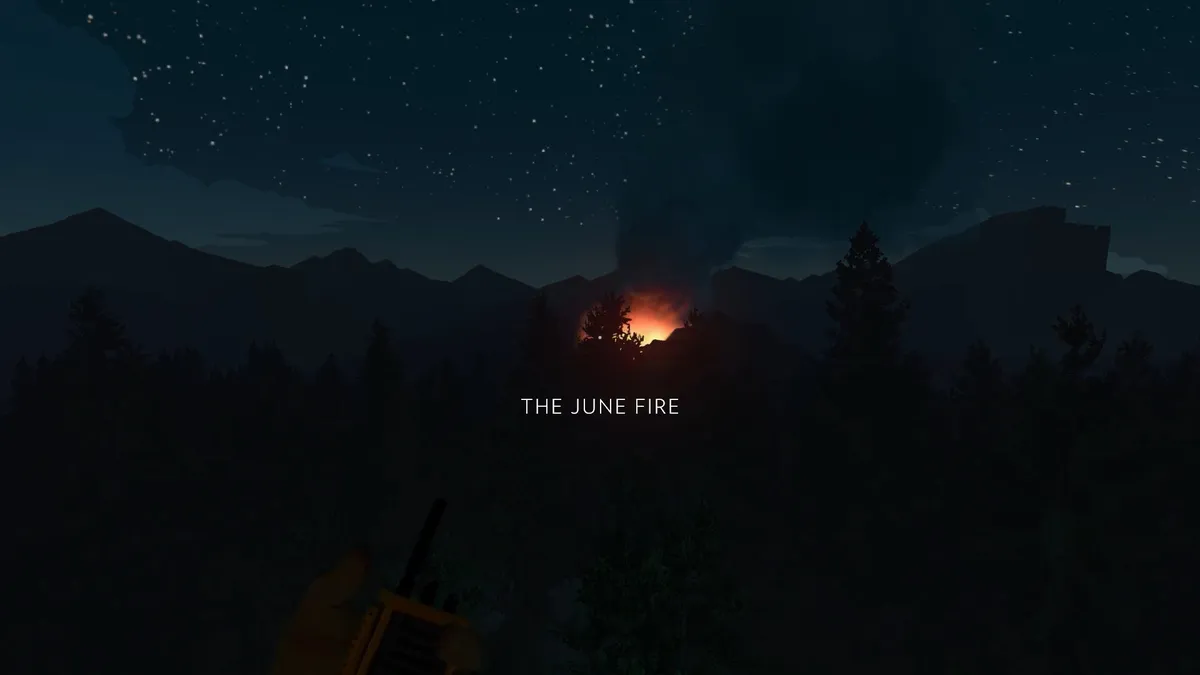
This exchange between Henry and Delilah has hung over me for ten years. After two months of talking every day, this is the talk that changes everything about the relationship at Firewatch’s core. This conversation, which begins as a sort of late-night rendezvous to talk about a raging fire, alters the trajectory of their summer. It perfectly captures what, for me, has always made Firewatch gaming’s definitive love story, and made Henry and Delilah's situationship one of the medium's deeper romantic entanglements. It’s about longing and the messy shape that desire typically takes in our lives. It’s about promises made and promises broken. About falling for the wrong right person. And yes, it is about the fallout of fucking even that up. The things you do for love, eh?
What I love about this scene, and Firewatch at large:
I love the two leads’ banter here. Delilah in this scene in particular is excellent. She’s usually in control of the game’s conversations (no matter what Firewatch’s dialogue system leads the player to believe) so it’s no surprise she’s in her element here as she leads a bumbling Henry through one of her more obvious flirtations. Henry is great here too in the role of the unwitting fool (been there, man) and it is wild to me that few performances in games--especially overtly romantic ones--have managed to bottle even an ounce of the electricity of this duo.
I love the deep sigh Delilah lets out near the end of their “talk.” The one moments before she implies she might want to consummate her and Henry’s budding (and inappropriate) relationship. A sigh meant to tease and arouse Henry as much as suggest a real sense of exhaustion with the boundaries currently stopping them from going any further. It’s sexy and it’s also so very real. In real life, you don’t often get steamy conversations like those out of fiction. Real love affairs don’t usually pave the way to larger than life boisterous declarations of love and wanting. I mean, good for you if it does, but that's rarely what I've observed and learned from love. The reality is quieter, closer to half-expressed thoughts and stolen moments than grand gestures. And that’s what this interaction most feels like. Not like a scripted dialogue meant to titillate the player, but an actual instance of intimacy between Henry and Delilah. A stolen moment between the two that we're fortunate enough to get a glimpse of.
I love the way that Delilah timidly whispers “you know,” which stands in stark contrast to the iron-willed and self-assured woman who’s traded playful barbs and barked commands at Henry for much of the game’s runtime. And I love the resolve she shows once Henry has sated her curiosity and desire and asked her what she would, in fact do, if they weren’t so far apart. It’s such a nakedly honest moment to put oneself out there, even against one’s better judgement, in hope of reciprocity and companionship, and Cissy Jones deserves the world for how effectively she turns the character on her head in the span of a few minutes and makes her real. Putting yourself out there doesn't really exist in the world of traditional video game romances, which can be gamed by a player's deference to guides or (usually) plying their object of desire with niceties. Firewatch's romance, which players have no control over, is nothing like that. It's better.
Finally, I love how unresolved the conversation is. Future developments in Firewatch’s story make reference to this pivotal conversation, but shy away from ever detailing what exactly Henry and Delilah share with one another that night. You and I and everyone else who's played Firewatch can imagine though, even if the scene itself immediately cuts to another day after the excerpt above, denying the player the right to their most private transgressions. After all, Henry is still a married man, a fact Delilah acknowledges in the same breath that she messily propositions him with a clandestine meeting at the end of the summer (and a good time with some tequila). And though Henry stumbles over himself time and time again, it’s more to do with his excitedness to be wanted (rather than needed) than due to fealty and faithfulness to his partner, Julia, who he has abandoned to play hero in the woods with Delilah. Not only do we never get a firm understanding of the night's event, but Firewatch's controversial ending refuses to ever realize the illicit affair. Whether Henry asks Delilah to stay or go at the game's conclusion (due to a wildfire that calls for the lookouts to be evacuated), she, infamously, doesn't make the meet. No one, not even the two at Firewatch's heart, get to see what might've been. Both Henry and Delilah escape the fire and their whirlwind summer with a head full of delusions and nowhere to put them. Sometimes, it's just like that.
Firewatch is for the yearners. Always has been. It is for the romantics. For those well-versed in desire. For the messy bitches out there. And for as long as I’ve known anything about love and longing, I’ve known it to be the hardest thing we do. Firewatch, which came out around my first (and amateurish) brushes with unvarnished and messy love, was highly instrumental in my understanding of that notion.
Henry and Delilah’s affair is one for the ages. Even before I knew the pangs of heartache and the depth of the kind of wanting on display in Firewatch, I appreciated how uncompromising it felt. "Here is how real people love one another, for all its beauty and all its ugly," I probably thought when I first finished the game. At the very least, I remember walking away and appreciating how little it diminished the very real connection between these two despite the morality of their implied relationship. That and how brave it felt to leave things unresolved. How could I hate (or even admonish) them when they are two obviously wounded people tripping and falling into something bigger than the both of them?
Theirs is a connection in a fleeting moment that feels difficult to put words to, no matter how verbose Henry and Delilah both are, and how hard I might try to do so now. They burn bright and they burn fast, and goddamn if that isn't the product of some grade-A yearning. And when it goes sideways, the fallout is solemn and wistful rather than explosive. There's a quiet understanding that both appreciate what the other has done for them, and this is it. It is a relationship and dynamic that games feel largely incapable of communicating for fear of scorning players in the current moment.
And maybe because of that, as well as Firewatch's unflinching resolve, its central romance (no matter how doomed it is) feels unassailable in the current landscape. Maybe that is why it's withstood the test of time all these years later. Maybe that's why I still feel the warmth of those tender, stolen moments.